 Admin
Admin 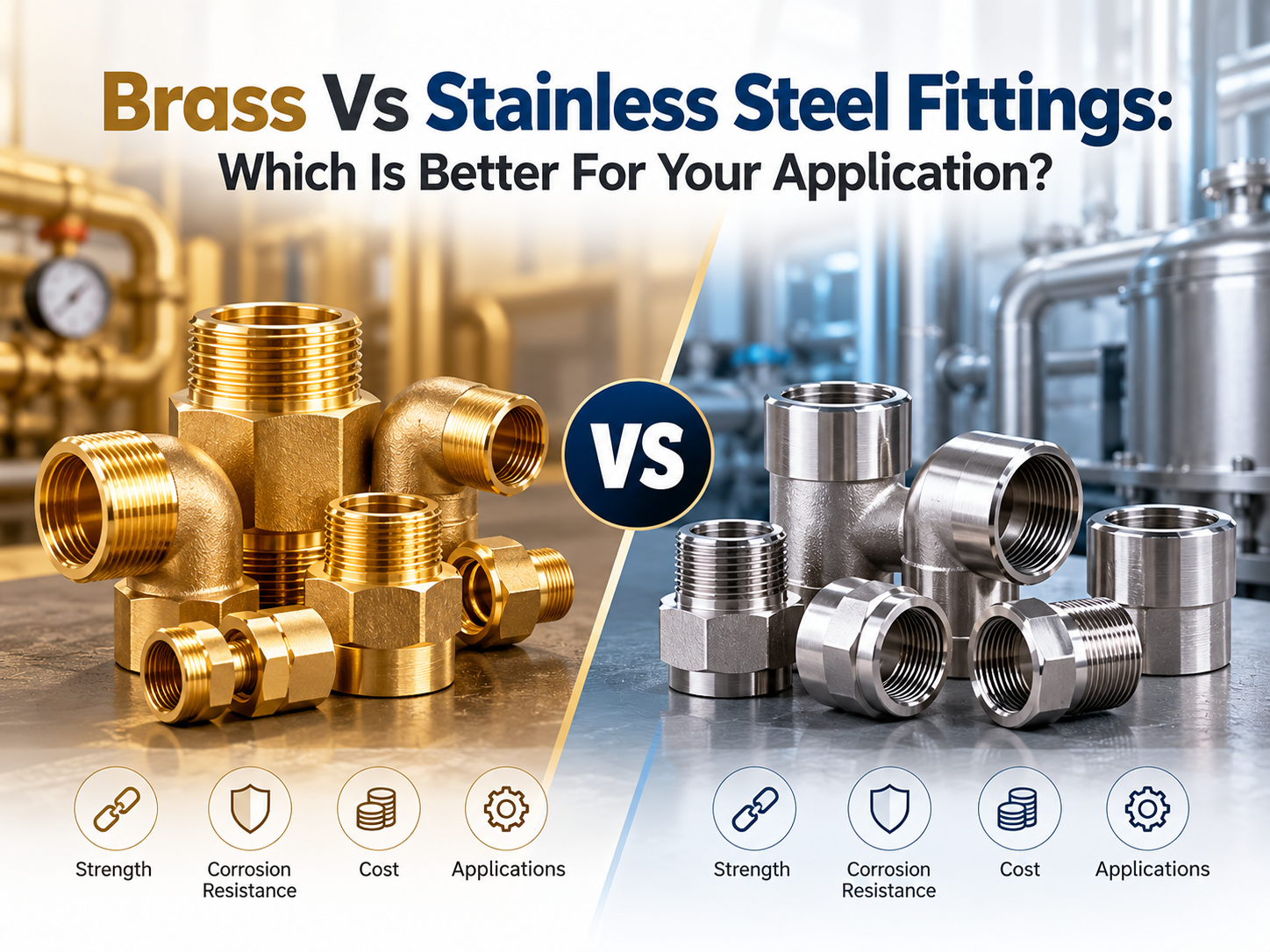
-
Admin
- 04 October 2026
Choosing the right material for pipe fittings, valves and precision components directly affects product life, performance and total cost. Two of the most popular choices are brass and stainless steel. Both resist corrosion and both are widely used in plumbing, gas, refrigeration and industrial systems, but they behave very differently. In this guide, we compare brass vs stainless steel fittings so buyers, OEMs and importers can choose the right material with confidence.
What Is Brass?
Brass is an alloy of copper and zinc, often with small additions of lead or other elements to improve machinability. Free-cutting brass grades such as CZ121 and IS 319 are widely used for CNC turned parts, forged fittings and inserts because they machine quickly and give a clean, precise finish.
What Is Stainless Steel?
Stainless steel is an iron-based alloy containing chromium, which forms a protective oxide layer on the surface. Grades such as SS 304 and SS 316 are common in fittings, with SS 316 offering better resistance to chlorides and marine environments.
Brass Vs Stainless Steel: Key Differences
1. Corrosion Resistance
Brass performs very well in potable water, gas and refrigeration systems and does not rust. In aggressive water with high chloride content, some brass grades can suffer dezincification, which is why dezincification-resistant (DZR) brass is used in such conditions. Stainless steel, especially SS 316, is better suited for harsh chemicals, seawater and highly corrosive industrial environments.
2. Strength And Pressure Rating
Stainless steel is stronger and harder, which makes it preferable for very high-pressure and high-temperature lines. Brass offers more than enough strength for most domestic, commercial, gas and HVAC applications at standard working pressures.
3. Machinability And Precision
This is where brass clearly wins. Brass machines much faster than stainless steel, with less tool wear and excellent thread quality. That is why brass is the first choice for complex CNC turned components, inserts, connectors and parts with tight tolerances.
4. Sealing And Installation
Brass is slightly softer, so threaded and compression joints seal easily and reliably. Brass threads are also less prone to galling, a common issue when tightening stainless steel threads.
5. Thermal And Electrical Conductivity
Brass conducts heat and electricity far better than stainless steel. This makes it ideal for electrical terminals, earthing components, cable glands and refrigeration parts.
6. Cost
Raw material prices vary with metal markets, but brass components are often more economical overall because faster machining reduces production time and cost per piece, especially for intricate parts.
Where Brass Fittings Are The Best Choice
- CPVC and PPR inserts for plumbing systems
- Bathroom fittings, bib cocks and ball valves
- LPG and gas parts, regulators and connectors
- Refrigeration parts such as flare nuts, Schrader valves and split valves
- Electrical components, terminals and cable glands
- Automotive parts such as fuel connectors and battery terminals
- Agricultural sprayer and irrigation parts
Where Stainless Steel Is The Better Option
- Food processing and pharmaceutical lines requiring hygienic surfaces
- Marine and offshore installations
- Chemical plants handling acids or aggressive fluids
- Very high-pressure hydraulic and steam lines
Why Source Brass Components From Jamnagar?
Jamnagar in Gujarat is known worldwide as India’s brass parts hub, with a deep ecosystem of forging, CNC machining, plating and testing. Buyers benefit from competitive pricing, skilled manpower and the ability to produce custom parts to drawing or sample.
Since 2000, Narayan Components has manufactured and exported brass CNC turned parts, forged fittings, PPR and CPVC inserts, gas parts, refrigeration parts and custom components to clients across India and international markets. Every batch is checked for dimensions, thread accuracy and finish before dispatch.
Conclusion
There is no single winner in the brass vs stainless steel debate. Stainless steel suits highly corrosive and extreme-pressure environments, while brass offers the best balance of corrosion resistance, machinability, reliable sealing and cost for plumbing, gas, refrigeration, electrical and automotive applications. For custom brass components made to your drawings, explore our brass product range or read more buyer guides on the Narayan Components blog, then contact our team for a quote.